A Winter Evening, Three Landmarks and No Telescope
Use this winter skywatching route to find Orion, Sirius and the Pleiades, then recognise their shapes and track their position against a familiar horizon.
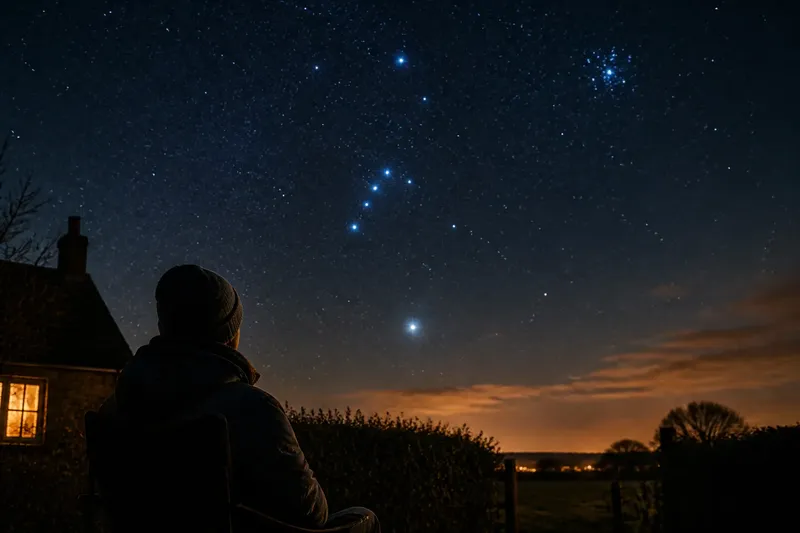
The common winter skywatching mistake is to scan the whole sky for every bright point at once; the cost is losing track of what you have already recognised. Instead, follow a route from Orion’s Belt to Sirius, then look for the Pleiades. You need a clear view and warm clothing, not a catalogue of constellations.
Why follow three landmarks instead of scanning the sky?
These landmarks offer three different kinds of visual clue: Orion’s Belt is a short row, Sirius is a brilliant single star, and the Pleiades are a compact cluster. Moving between them gives your attention a purpose and helps you remember where each sits in relation to the others.
The route is an observing exercise, not a claim that the three landmarks form a physical group. They lie at different distances; their apparent relationship is the result of how they look from Earth. That makes them useful for practising how to read patterns without mistaking appearance for depth.
This route is for northern-hemisphere winter evenings when Orion is above the horizon. The season and time of night affect where the landmarks appear, and buildings or trees can block them. If one is hidden, skip it and return when the view is clearer rather than searching at random.
How can you prepare without turning the outing into a project?
Choose a safe spot with an open view and little direct light, such as a garden or a familiar field edge. Check the forecast and the ground before settling in. If you are going somewhere unfamiliar, plan the route in daylight and tell someone where you will be.
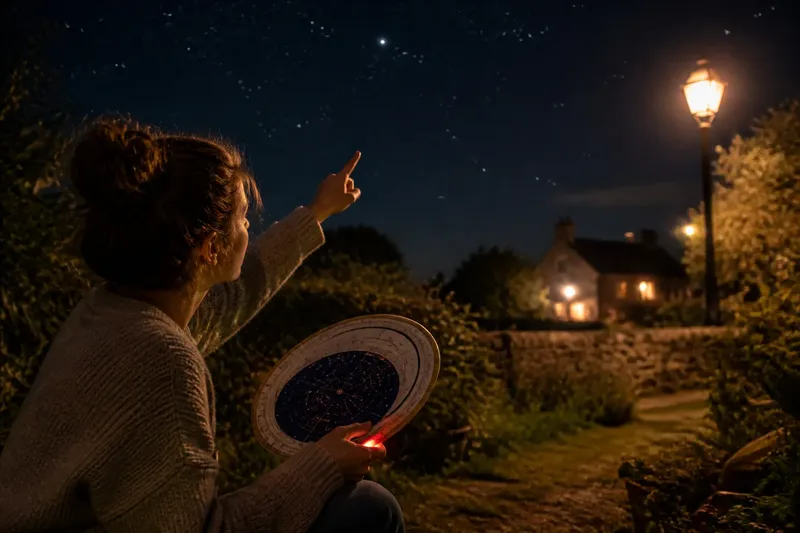
Wear layers, gloves and a hat; take a chair or something dry to sit on. Keep a torch pointed down, and avoid looking at a bright phone screen while your eyes adjust. A red-light setting can be useful if you already have one, but buying equipment for a short session is not worth the effort.
You can do this route without a star chart, app or binoculars. If you already use an app, check the direction briefly and dim the screen, then put it away. The point is to recognise the actual sky, not to collect equipment or chase a perfectly dark location.
How do you find Orion’s Belt and follow it to Sirius?
Start with Orion, a prominent winter constellation. Look for three stars close together in a short, nearly straight row: that is Orion’s Belt. The row is easier to pick out than Orion’s full outline, so you can continue even if the surrounding shape is unclear.
From the Belt, trace its direction down and to one side towards Sirius, the brightest star in the night sky. Keep the Belt in view as you turn your gaze, so you can follow the line rather than searching across a large area. Haze, a building or a low horizon may hide Sirius; if so, return to the Belt and try again when the view is open.
Imagine you are in a garden where Orion is visible above a roof but a hedge blocks the lower part of the sky. You identify the Belt, follow its direction and find Sirius in the gap beside the hedge; the observable result is a route you can repeat without needing to memorise the whole constellation. If Sirius remains hidden, the hedge is the limit of that viewing spot, so choose an open position rather than guessing where the star should be.
Where do the Pleiades fit into the route?
After locating Sirius, widen your view and look higher towards the Pleiades. This star cluster can look like a small scattering of pinpoints or a tiny dipper. Its compact patch is the clue; you do not need to identify a particular number of stars.
The Pleiades are also called the Seven Sisters, but how many stars you can pick out depends on your eyesight and the conditions. Look slightly to one side of the cluster if some points seem faint; this averted vision can make them easier to notice. Do not keep counting if the group’s shape is already clear.
Now hold the three landmarks in mind: a short row, a bright point and a close group. Notice how they occupy different parts of your view, rather than trying to force them into a single outline. Their shapes make a simple route across the sky, even though they are not a nearby trio in space.
What can you notice as the evening goes on?
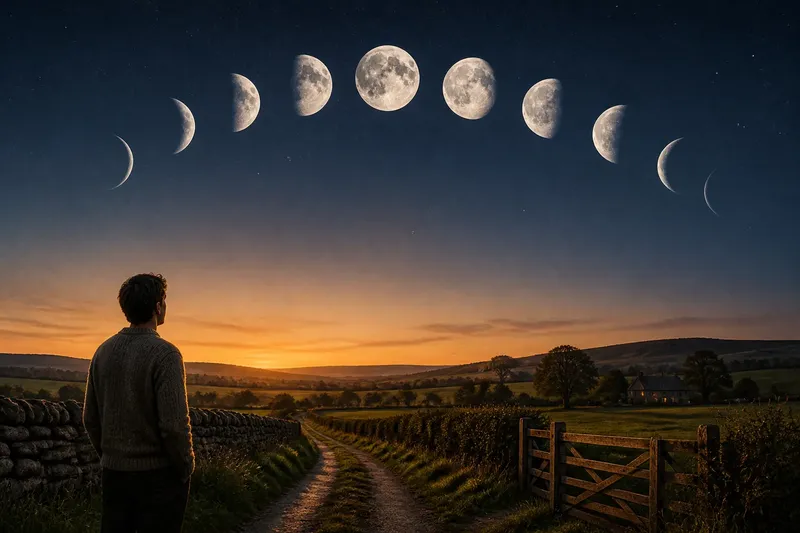
Choose a fixed reference, such as a roofline or a tree, and note where Orion’s Belt sits beside it. After a quiet pause, look again. The stars appear to shift across the sky as Earth turns, while the familiar patterns retain their shape over an observing session.
For a simple record, sketch a few dots and lines beside the outline of the roof or tree. Label only what you have recognised. The sketch does not need to be a precise chart; its purpose is to help you compare your view later.
If you return on another clear winter evening, the landmarks may appear at a different height or at a different time. Keep the same fixed reference in your sketch or memory, and compare what you see rather than expecting a dramatic change during a brief pause.
What should you do if one landmark is hard to see?
Can I see Orion, Sirius and the Pleiades from a town?
Orion’s Belt and Sirius can remain recognisable under some urban lighting, while the Pleiades may be harder to separate. Move away from direct lamps if you can do so safely, then give your eyes time to settle before deciding the cluster is not visible.
What if Orion is hidden by cloud or a building?
Cloud, a blocked horizon or the time of year may explain why Orion is missing. Since the route uses the Belt as its starting point, wait for a clearer view or choose another evening when Orion is above the horizon.
Do I need a compass to follow the route?
No. A compass can help describe your viewing direction, but it cannot identify the Belt or the other landmarks for you. Keep the patterns in view as you move your gaze, and use the horizon to stay oriented.
Why do the Pleiades sometimes look like only a few stars?
Eyesight, haze, light pollution and the time spent looking can all affect which points stand out. Look for a close-knit patch rather than treating the cluster’s name as a required count.
How can you make each pause more useful?
Give each landmark a different prompt: what makes the Belt look like a row, why does Sirius draw attention, and how tightly packed do the Pleiades appear? These questions focus your view without turning a relaxed evening into a test.
On your next clear winter evening, use this winter skywatching route to move from Orion’s Belt to Sirius and then the Pleiades. Note one fixed roofline or tree alongside the patterns; that small detail gives you a dependable way to compare the sky when you look again.